Seminar News
Seminars Community
SPRING FEATURED AUTHOR
Naama Harel
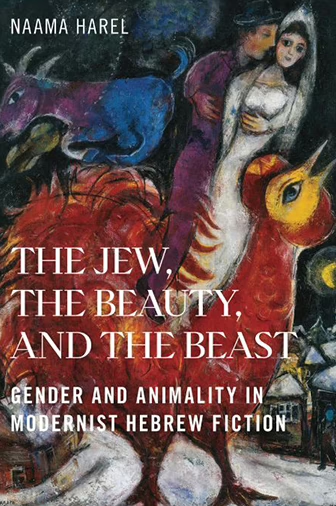
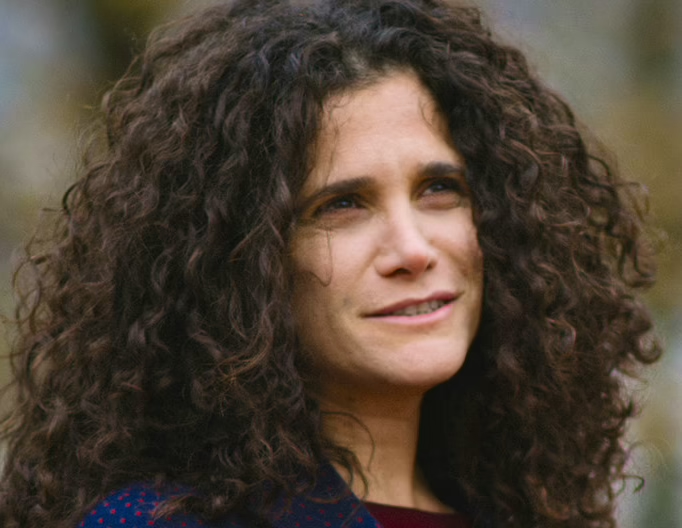
Naama Harel discusses her book The Jew, The Beauty, and the Beast (Rutgers University Press, 2026) with The Seminars Chief Creative Officer, Summer Hart. This book was published with the assistance of a Schoff Award with work presented at the University Seminar on Human-Animal Studies.
Summer Hart: One might think of the “man-eater” trope as an inversion of the analogy of women as prey/meat. Is it? When viewed through an ecofeminist lens, what functions do these archetypes serve in reinforcing or challenging patriarchal power structures?
Naama Harel: Predator-prey dynamics have been widely used as a model for describing sexual relations between men and women, whereby women are equated with prey animals, and men are presented as their predators. Ecofemists, like Carol Adams in her seminal study The Sexual Politics of Meat, critically analyze the linkage between the sexual objectification of women and the objectification of animals for consumption. According to this androcentric parallel—which is deeply entrenched in Western culture and embodied in numerous cultural representations—women are reduced to a piece of meat. Having sex with them—regardless of their consent—is equivalent to the virile act of meat-eating. The trope of the man-eater is an inversion of the analogy of women to prey/meat, but it’s likewise misogynistic, as it also envisioned by men that animalize women.
SH: The cover of your book is Marc Chagall’s “The Bride and Groom on Cock.” Can you talk about the symbolism in this piece and why you chose it for your cover?
NH: Marc Chagall’s paintings of turn-of-the-century Eastern European Jewish towns, known as shtetls, famously offer a vision of Jewish life that is at once intimate, lyrical, and symbolically charged. Within this world, animals—such as cows, goats, and roosters—are not marginal details, but rather integral members of the communal fabric. They appear as agents alongside human figures, often gazing knowingly, collapsing the boundary between human and animal life. These beings evoke both the material realities of shtetl existence—agrarian labor, domestic proximity—and a deeper symbolic register, drawing on Hasidic storytelling and Jewish folk traditions in which animals participate in a shared moral and spiritual universe. The animals in “The Bride and Groom on Cock” provide companion presence, embodying continuity, vulnerability, and a kind of sacred immanence that binds the community together across species and across time. As soon as I saw this image I knew it would be the book cover, as it is a visual manifestation of the literary works examined in the book.
SH: You presented some of this writing at The University Seminar on Human-Animal Studies. How did this experience inform the shape of your book?
NH: Sharing my work in progress with colleagues in The University Seminar on Human-Animal Studies was particularly insightful. I typically present my work in Hebrew/Jewish literature conferences, where participants are often familiar with the literary works, but not with the prism of Human-Animal Studies that I use in the analysis of these works in this book. Here, it was the other way around; my colleagues in the seminar were not familiar with the literary corpus, but they were conversant with the theoretical perspective. This interdisciplinary discussion contributed to expanding the conceptual and methodological lenses through which I read literary texts, especially by foregrounding how species, embodiment, and power intersect across cultural and theoretical frameworks. Engaging with scholars of Human-Animal Studies from other departments and programs, such as religion, anthropology, and archeology, has also helped refine my reading practices, particularly in attending to how representations of animality structure human subjectivity in Hebrew modernist fiction and how gendered identities are co-constructed through these interspecies imaginaries. In this sense, interdisciplinary exchange does not simply supplement my research but actively reshapes its questions, enabling a more nuanced understanding of how literary texts participate in broader debates about the human–animal divide, feminist theory, and cultural modernity.
SH: What are you currently working on?
Currently, I am working on a new book that examines Hebrew and Yiddish literature depicting slaughtered animals and their slaughterers. Whereas in H. N. Bialik’s renowned 1903 poetic responses to the Kishinev pogrom (“On the Slaughter” and “In the City of Slaughter”) the slaughtered animals are a mere metaphor for the Jewish victims, many other literary works probe—ethically, religiously, emotionally, and politically—the question of animal slaughter against the background of antisemitic dehumanization of the Jews, as well as their persecution and social vulnerability. The first part of the manuscript explores the anti-slaughter stance, taken by marginalized protagonists: animals, victims of persecutions, and children. Its second part traces two antithetical tropes—ruthless and merciful—of ritual slaughterers, who are standing at the threshold of corporeality and spirituality.
405 | Studies in Religion

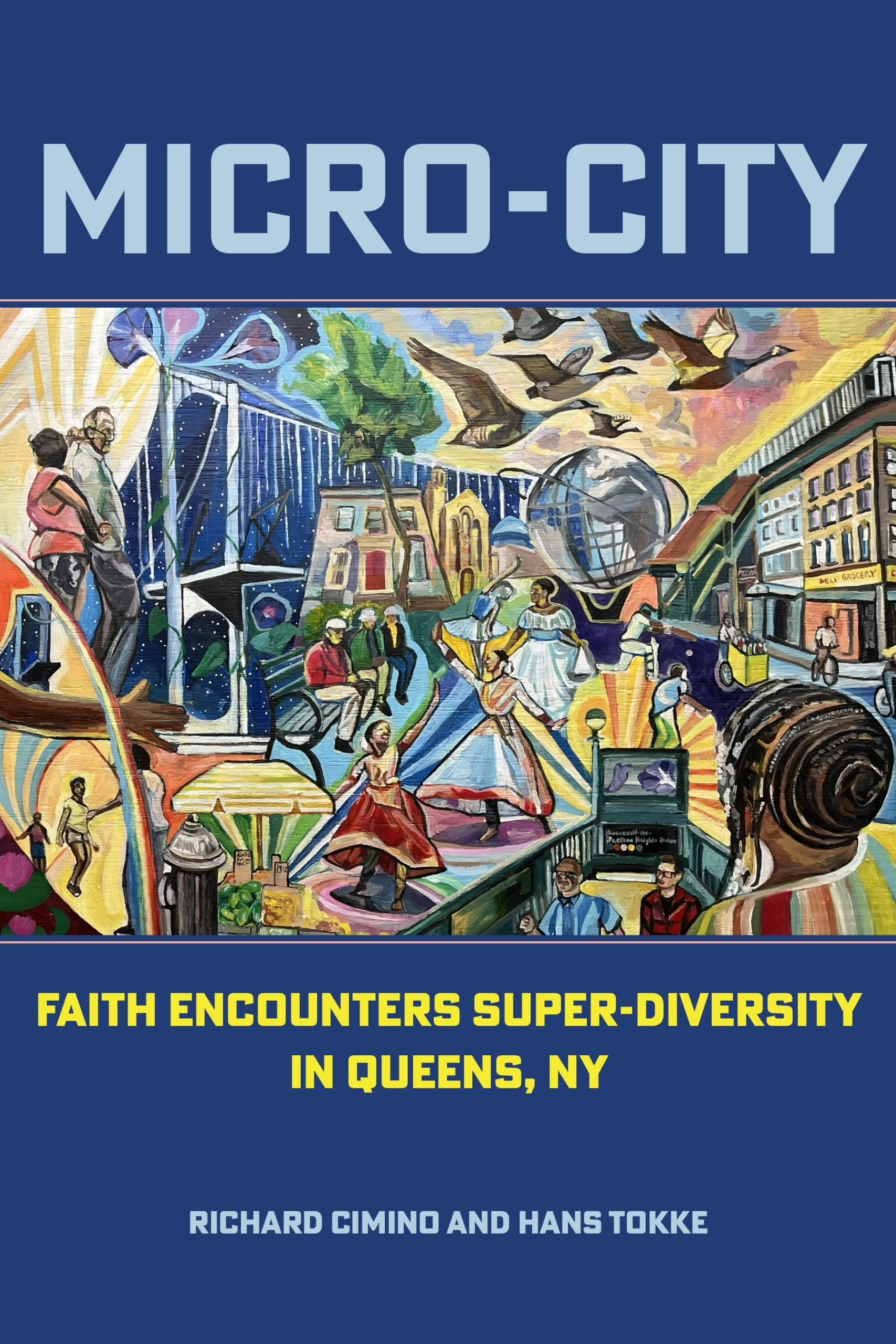
Cimino and Tokke note the significant help that they received from the feedback, advice, and encouragement of The University Seminars on Studies in Religion and Contents and Methods in the Social Sciences.
435 | Studies in Contemporary Africa
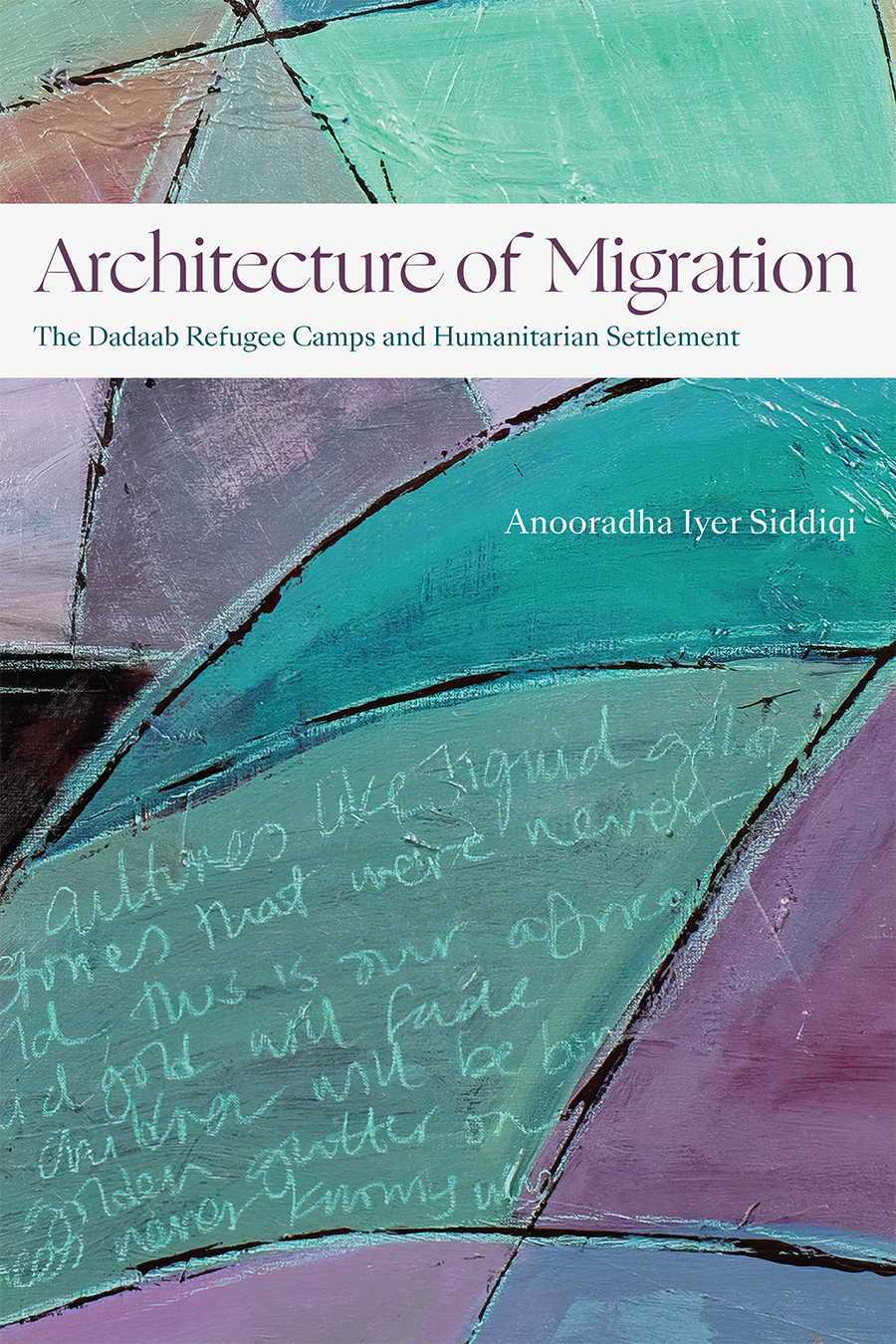
Anooradha Iyer Siddiqi’s book Architecture of Migration (Duke University Press, 2024) won the 2026 Society of Architectural Historians Alice Davis Hitchcock Book Award. The award was established in 1949 to recognize annually the most distinguished work of scholarship in the history of architecture published by a North American scholar. The book was also recognized by a 2025 African Studies Association Best Book Prize Honorable Mention. This book was supported by the Schoff fund.
477 | South Asia
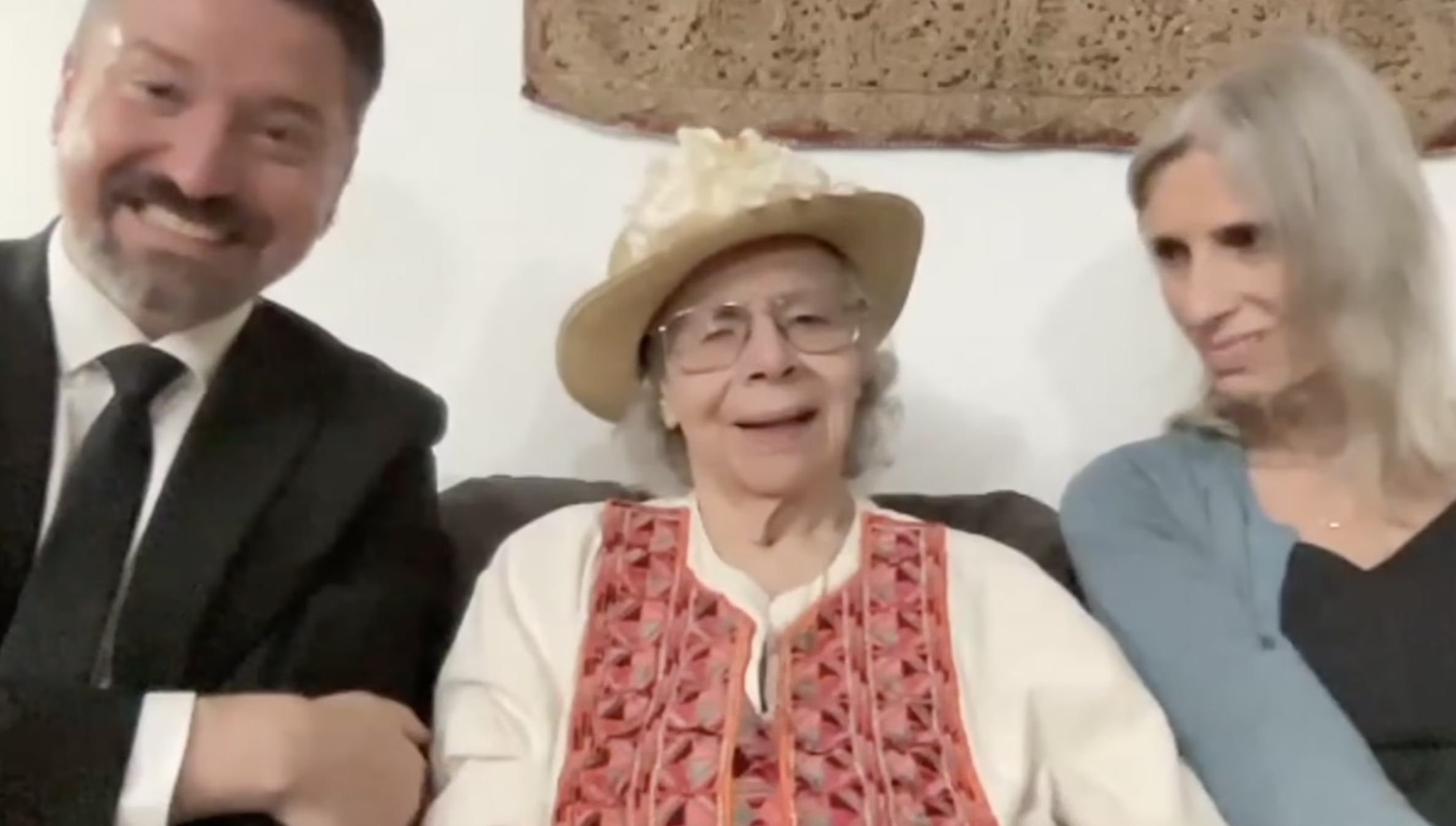
On December 1, 2026, The University Seminar on South Asia hosted a virtual event honoring longtime seminar member and benefactor Professor Emerita Frances W. Pritchett. The event, attended by Dr. Pritchett and eighty-five members, associates, and friends of the seminar, featured talks by three of Dr. Pritchett’s former students: Owen Cornwall (Berkeley), Pasha Khan (McGill), and Amy Bard (independent scholar).
491 | Early American History and Culture
503 | Economic History
507 | Death
Civic Solidarity: The Past, Present, and Future of Sustainable Burial in New York City
Friday, May 8, 2026
6:00 – 7:00 PM
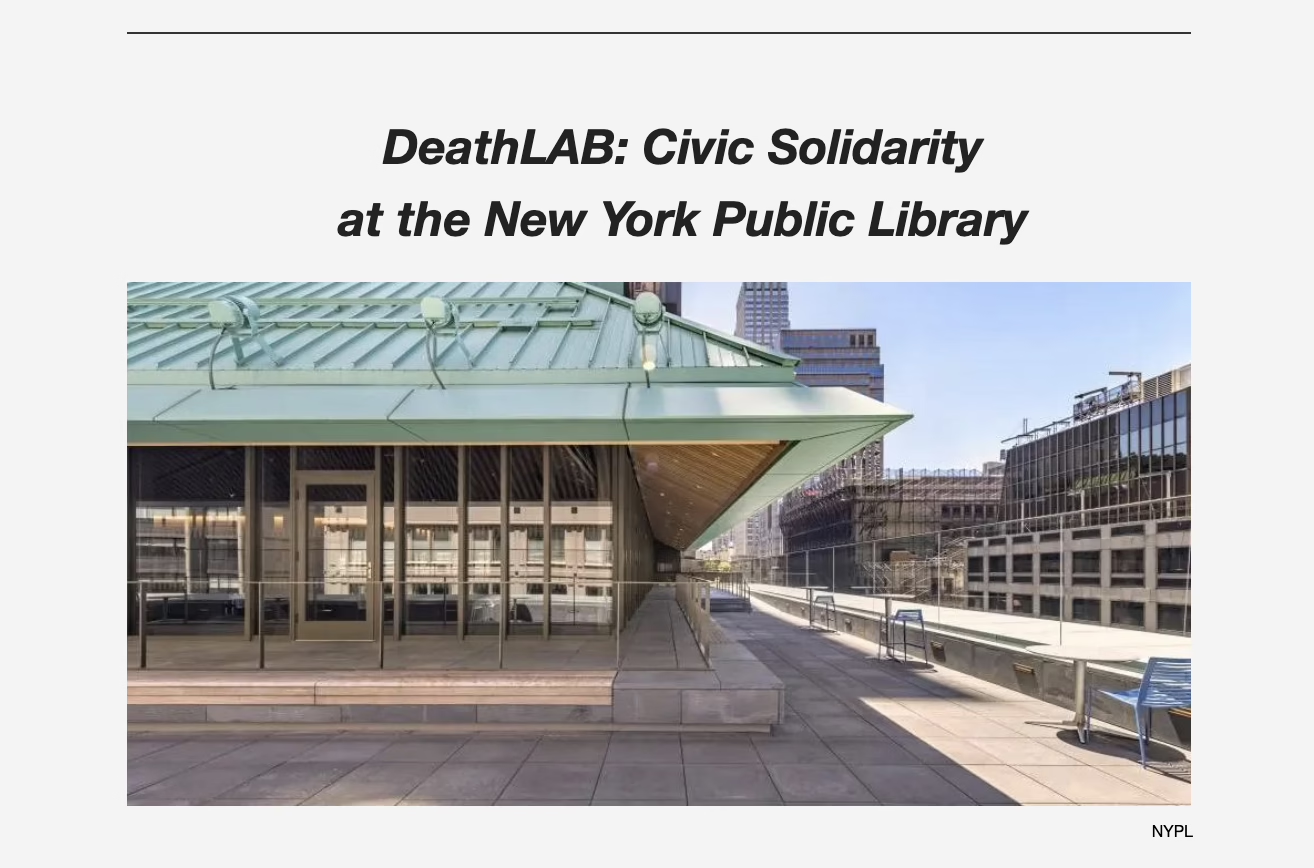
DeathLAB’s team is collaborating with the New York Public Library’s Stavros Niarchos Foundation Library (SNFL) to host a Civic-Solidarity presentation and public conversation in their main rooftop lecture hall. The event is an opportunity to connect with New Yorkers through one of the city’s most beloved institutions, at its largest circulating branch. Supported by a grant from the New York Community Trust, we will share the lab’s philosophy, research, and urban proposals, followed by a Q&A and open forum. Our talk at the NYPL will highlight adaptations of 18th- and 19th-century municipal cemeteries into public spaces like Bryant Park, among many others.
On March 21st, Karla Rothstein, together with artist and designer Ian Callendar, exhibited their installation, HartLine, at Data Through Design 2026. Data Through Design (DxD) is an annual exhibition featuring artworks that creatively analyze, interpret, and interrogate data made available in New York City’s Open Data portal. This year’s projects explore ecosystems and cycles of life—how data expresses rhythms of growth, decay, renewal, transformation, and the interplay between human and non-human worlds.
511 | Innovation in Education
Co-chair Ronald Gross published a letter in the New York Times on March 1, 2026 titled “Trump’s Sins Are His Own. Leave Pagans Out of It.” in response to an essay on the ancient roots of human dignity and compassion. Citing his book Socrates’ Way: Seven Keys to Using Your Mind to the Utmost, Gross’s letter concluded: “The ideal of human dignity has multiple roots and diverse champions.”
525 | The Middle East

Seminar co-chair Gary Sick (who advised three US presidents on Iran while serving on the White House National Security Council staff) was interviewed by Christiane Amanpour for CNN.
529 | Appetitive Behavior
533 | The History and Philosophy of Science

Indigenous Botany: The Cruz-Badiano Codex in Dialogue
This event, conceived and organized by The University Seminars Director Susan Boynton and hosted by the Center for Science and Society, the Medieval and Renaissance Studies Program, and the University Seminar on the History and Philosophy of Science, was held on April 7, 2026.
The Cruz-Badiano Codex, which transmits Nahua medicinal recipes translated into Latin, was compiled in 1552 by Indigenous scholars of the College of Santa Cruz de Tlatelolco, among them the physician Martín de la Cruz and the translator Juan Badiano. It is decorated with 184 vivid illustrations of curative plants that have inspired works by artist Blanka Amezkua.
The conversation included an introduction to the Codex by Nuria Galland, Director of the Museum of Mexican Medicine and Amezkua’s discussion of the Codex in relation to her works.
539 | Cinema and Interdisciplinary Interpretation
556 | Arabic Studies
577 | Brazil
Tatiana Bertolucci Peixoto has published a keyword essay, “Gender ideology,” in a special issue of Dialectical Anthropology dedicated to Raymond Williams’ legacy. Tracing the term’s transnational circulation through three waves, the article analyzes how “gender ideology” operates as a constitutive keyword that aggregates diffuse social anxieties. It explores how this semantic struggle builds the discursive and infrastructural frameworks necessary for illiberal projects, pointing toward the social struggles of our current political moment.

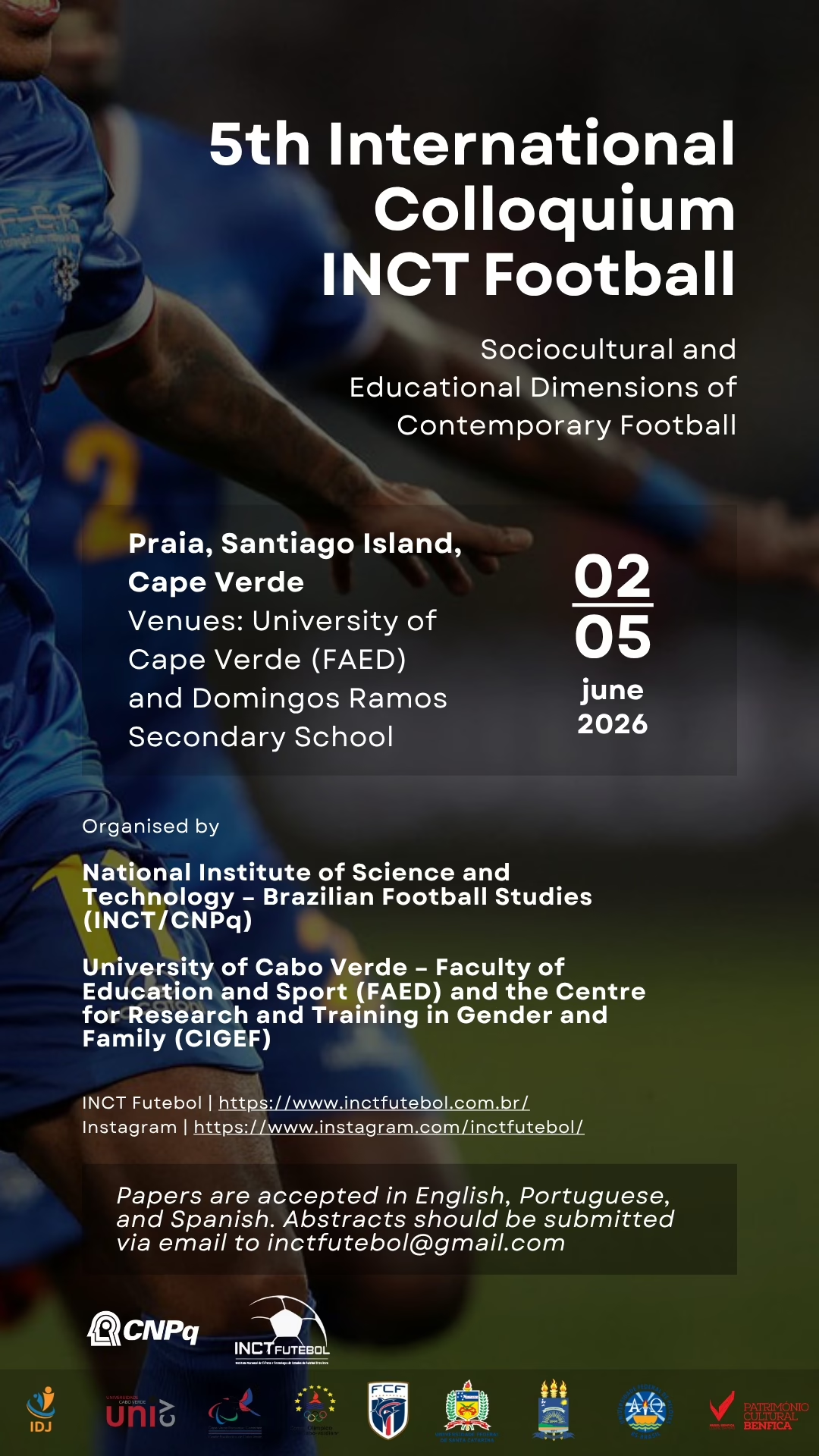
Carmen Rial is organizer of a new book series and an international colloquium.
The National Institute of Science and Technology for Brazilian Football Studies has begun publishing a book series entitled Football: Culture, Politics, and Society. The books have been published by ABA Publicações, the publishing house of the Brazilian Anthropology Association. The first three volumes in the collection are now available for free download. Nine additional volumes are scheduled for release.
The National Institute of Science and Technology for Brazilian Football Studies (INCT Football) will hold its 5th International Colloquium in Cape Verde from June 2 to 5, 2026. The event will feature discussions on sociocultural and educational manifestations in contemporary football. The panels will address topics such as football as a space for inclusion and resistance, and football in school physical education.
661 | Religion in America
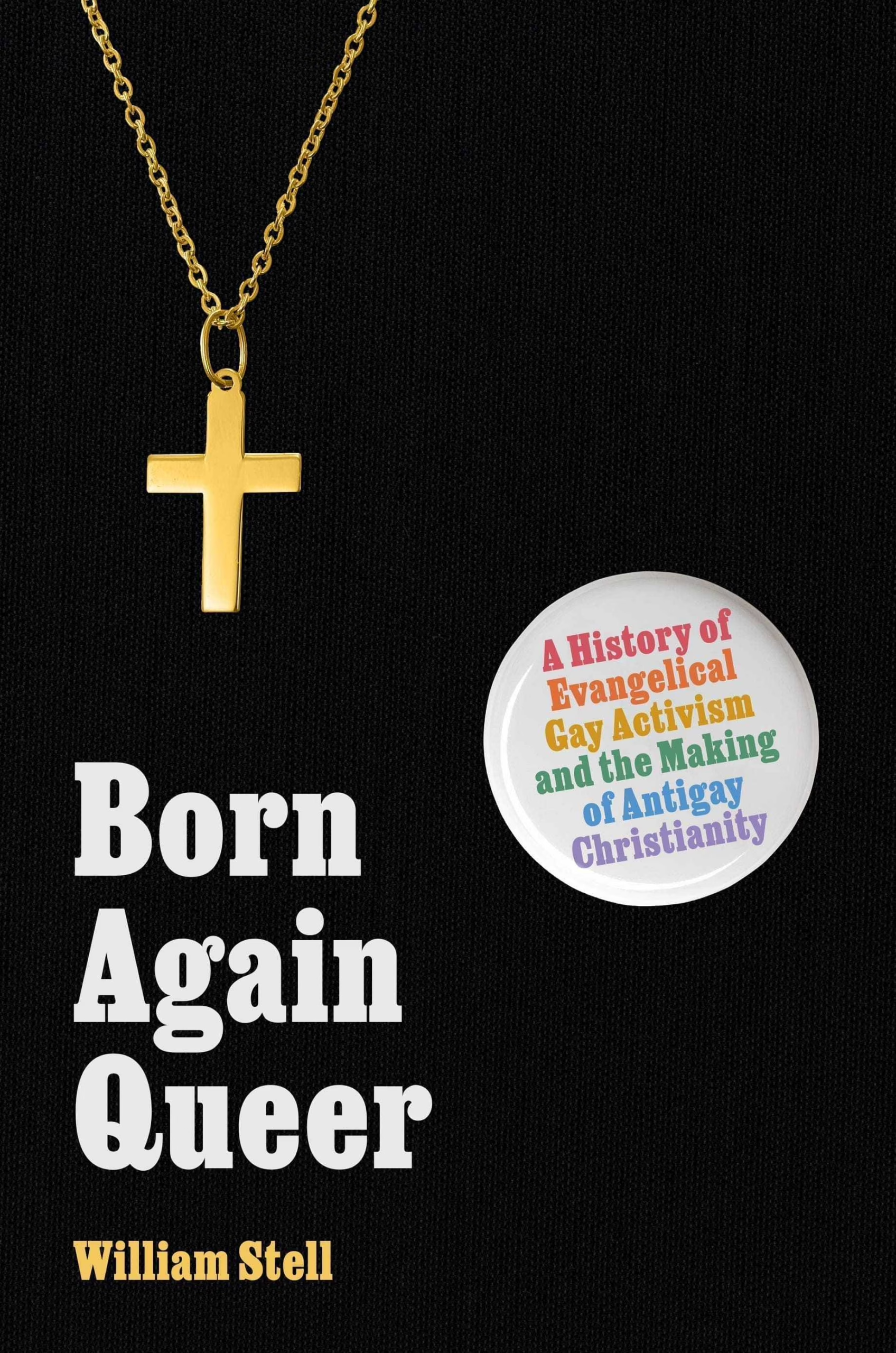
703 | Modern Greek

Nikolas Kakkoufa awarded the Community Building and Engagement Award of Columbia’s Humanities division.
Seminar co-chair Nikolas Kakkoufa has been awarded the Community Building and Engagement Award of Columbia’s Humanities division
This award is given to those who have shown dedication to their students, colleagues, department, campus, or field, through teaching, mentoring, and other service.
797 | Korean Studies
The members of the Korean Studies community marked the year with notable publications, exhibitions, and honors.